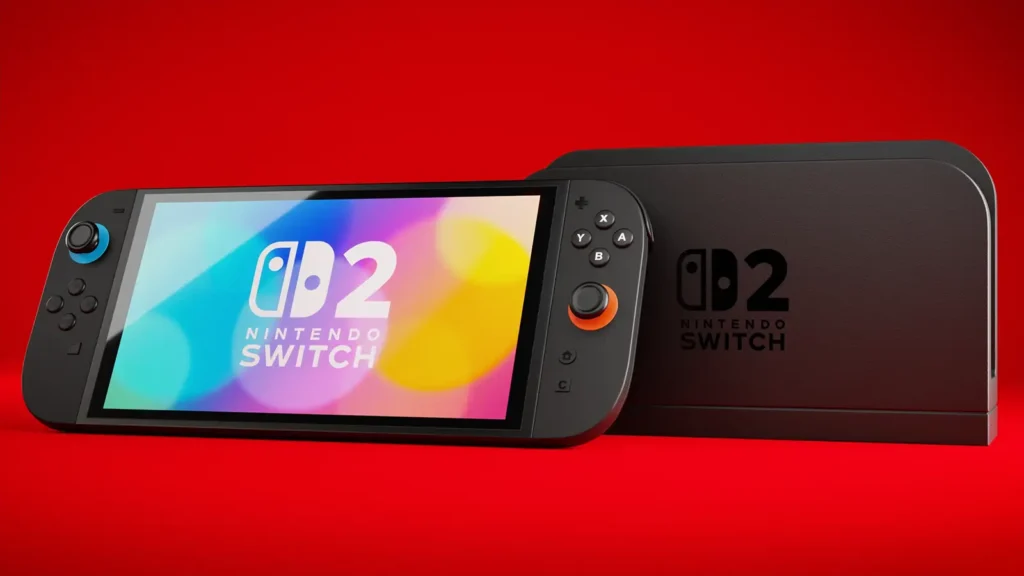

seniorspectrumnewspaper – Variable Refresh Rate was expected to improve visual smoothness on Nintendo’s Switch 2. In practice, results have been inconsistent. Many players report screen tearing and stuttering, especially in demanding third-party games. The issue becomes more visible when frame rates fall below 40 frames per second.
Read More : TikTok Confirms Deal, CEO Plans to Retrain US Algorithm
Switch 2 supports VRR mainly in handheld mode. When docked, the feature is unavailable. Even in handheld use, VRR often fails to deliver smooth gameplay. Digital Foundry highlighted this problem in Hitman World of Assassination. The game launched with unlocked frame rates but fluctuated between 30 and 40 fps. Despite VRR being active, motion appeared uneven and distracting.
Developers later released a patch that capped the game at 30 fps. While this reduced stutter, many players viewed it as a compromise. The core issue remained unresolved. VRR on Switch 2 appears to struggle with low frame pacing rather than raw performance. Below 40 fps, the display cannot refresh fast enough to hide inconsistencies.
This limitation contrasts with expectations for a modern console. Competing handheld devices often support broader VRR ranges. On Switch 2, the lower VRR threshold creates a gap where neither locked frame rates nor VRR performs optimally. As a result, developers face difficult choices when targeting performance.
Ubisoft encountered the same challenge during development of Assassin’s Creed Shadows and Star Wars Outlaws. Both titles target cinematic experiences with heavy visual demands. Instead of abandoning VRR, Ubisoft engineers searched for a workaround. Their solution now stands out as one of the few success stories on the platform.
Ubisoft’s VRR Solution and Its Potential Impact on Switch 2 Games
Ubisoft shared its approach during discussions at the FRVR conference. According to the developers, the key was overcoming VRR’s lower frame rate limit. When games run at 30 fps, standard VRR disengages. Ubisoft implemented a custom algorithm to bypass this issue.
The technique involves duplicating frames intelligently. Each rendered frame is displayed twice within a 60Hz refresh window. One presentation occurs midway through the refresh cycle. The second appears at the end. This approach maintains a steady output rhythm while preserving visual smoothness.
In practice, the display operates at 60Hz while the game renders at 30 fps. The result feels smoother than traditional frame doubling. More importantly, it avoids the tearing seen in other Switch 2 titles. Assassin’s Creed Shadows demonstrates consistent motion despite lower frame rates.
Ubisoft confirmed it is sharing this knowledge directly with Nintendo. The company hopes the solution can improve VRR support across the system. If implemented at the OS level, other developers could benefit without custom engineering. This would significantly improve third-party performance on the console.
The discussion also touched on Low Frame-rate Compensation. LFC is designed to extend VRR effectiveness at low fps. However, Ubisoft noted inconsistent implementation across games. Standardizing such features could reduce performance disparities.
Read More : Grok Faces Backlash After Spreading Bondi Shooting Misinformation
Ubisoft also addressed DLSS adoption. Nvidia’s upscaling technology performs better than traditional TAA. Yet many developers hesitate to rely on it. Ubisoft believes DLSS has untapped potential on Switch 2, especially when hardware limits appear.
Looking ahead, collaboration between Nintendo and developers will be critical. Ubisoft’s solution proves VRR limitations are not insurmountable. With system-level improvements, Switch 2 could deliver smoother gameplay across more titles. That progress would strengthen confidence in Nintendo’s next-generation hardware.