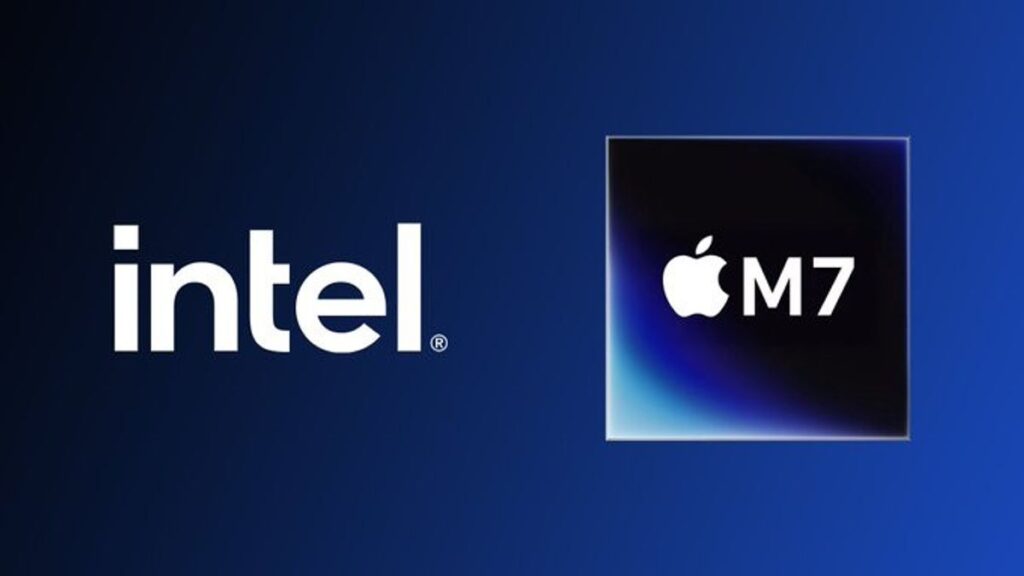

seniorspectrumnewspaper – Apple’s next-generation M7 chip could break away from its usual manufacturing partner, TSMC. According to renowned industry analyst Ming-Chi Kuo. Apple may turn to Intel’s foundry for the M7, marking a significant shift in the company’s chip production strategy. Kuo’s report suggests that the M7 will be the first Apple Silicon chip to use Intel’s upcoming 18AP process node. A technology expected to become operational in 2027. This move could pave the way for a broader collaboration between Apple and Intel. Though higher-end chips will likely remain with TSMC. Here’s a breakdown of what this means for Apple’s future chip roadmap.
Read More : Xiaomi Poco Pad M1 to Launch Globally with 120Hz Display
Intel 18AP: A New Era for Apple’s Entry-Level Chip?
Industry analyst Ming-Chi Kuo has revealed that Apple is planning to use Intel’s 18AP process node for its next entry-level M-series chip, the M7. Intel’s 18AP node is expected to come online by 2027. And Apple may be the first major customer to adopt it. This marks a shift from Apple’s current partnership with TSMC. Which has handled manufacturing for the M1, M2, and M3 chips.
The M7 is anticipated to power future lower-end Apple devices, including models of the iPad and MacBook Air. It might also feature in upcoming iterations of the Vision Pro. By shifting the M7 to Intel’s foundry, Apple could benefit from a more diversified supply chain and potentially lower production costs. The M7’s use of Intel’s technology suggests that Apple is willing to experiment with alternative foundries, particularly for non-premium models.
Intel’s 18AP node is set to be a key technology for future products. Including Intel’s own Panther Lake processors, which are expected to launch next year. However, the performance and efficiency of Intel’s 18AP node remain uncertain until consumer-grade products come to market. This collaboration could give Apple insight into the potential of Intel’s new process technology before committing to it for higher-end chips.
Read More : SpaceX Launches Cheapest 100Mbps Starlink Plan in Canada
TSMC to Retain Dominance for High-End Apple Chips
Apple’s decision to maintain its partnership with TSMC for premium products underscores the foundry’s leadership in advanced chip manufacturing. The M7 Pro and M7 Max will likely push the boundaries of Apple’s performance in high-end devices, such as the MacBook Pro and high-end iPads. While Intel’s 18AP process will focus on the more affordable, entry-level offerings.
This distinction between the M7 and its Pro/Max counterparts suggests that Apple is taking a hybrid approach to chip production, leveraging the strengths of both Intel and TSMC. It also indicates that Intel’s 18AP technology might be more suited for non-premium applications. While TSMC’s more refined processes will remain the choice for cutting-edge, high-performance chips.
In conclusion, the move to Intel’s 18AP node for the M7 represents a strategic decision by Apple to diversify its supply chain and potentially take advantage of lower costs for entry-level devices. However, for its higher-end chips, Apple will continue to rely on TSMC’s superior process nodes. As Intel’s 18AP technology matures, it could become a viable alternative for more of Apple’s product lineup, attracting other major tech companies like Qualcomm to consider Intel for future chip production.